Each elephant carries a past. Here, they find peace, choice, and a second chance. Every elephant at Elephant Forest has a story worth knowing. Some arrived quiet, some playful, others unsure. But all of them are on a journey—from captivity to calm, from duty to dignity. Here are just a few of the beautiful individuals who call our forest home.
Koon
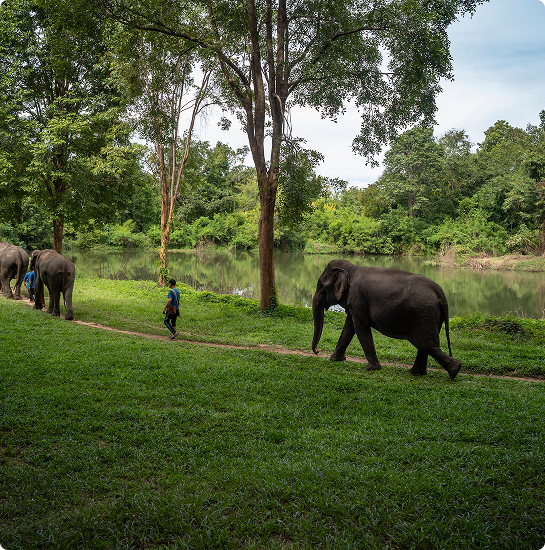
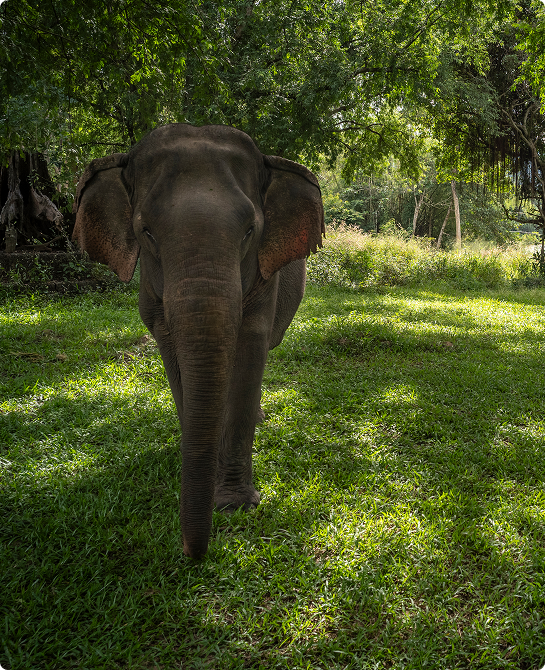
Our Elephants & Their Way of Life
At Elephant Forest Phitsanulok, every elephant has a name, a story, and a soul. They came to us not as attractions, but as individuals seeking rest, healing, and dignity. Most spent decades working—some in logging, others in tourism. A few arrived thin, limping, or emotionally shut down.
Here, we let elephants be elephants. They roam, splash, eat wild herbs and bark, and rediscover natural rhythms. We don’t instruct—they choose. We observe and support.
Respecting Their Nature, Not Rewriting It
The Mahout Bond: More Than a Job
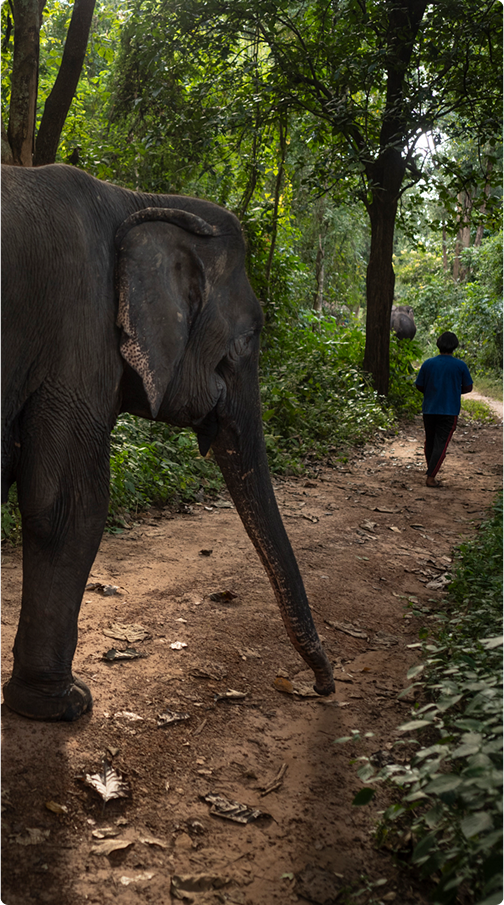
Many of our mahouts come from the Karen and Kui communities, where elephant knowledge has been passed down for generations. Their role is not to control, but to care—with deep attention to signs like appetite, digestion, and mood.
A skilled mahout guides elephants to live safely alongside humans, protecting both. Some carry tools for emergencies; many carry none, relying on trust and understanding.
A good life for an elephant begins with a good mahout.
That’s why the well-being of mahouts matters just as much as the well-being of elephants.
We deeply value their patience, instincts, and quiet dedication—qualities that are often unseen, but essential to every elephant’s care.
Why No Bathing or Feeding Activities?
Visitors play an important role: to observe, not intervene. When tourists expect bathing or hand-feeding, mahouts must manage the elephant’s behavior to fit the experience—sometimes restricting natural actions like rolling or splashing.
That’s why we don’t offer these activities. Instead, elephants bathe freely, as they wish, and mahouts provide care privately.
The less we ask elephants to perform, the more they can simply be themselves—relaxed, instinctive, and at ease. And when we give them space, we also create safety. In that calm space, we as observers also feel more at ease—able to witness elephants being truly themselves, without pressure or performance
Tools and Boundaries: Honest and Not Idealized
We do not enforce a “no hook” or “no chain” policy as a slogan. Instead, we focus on context, safety, and welfare—for both elephants and their mahouts.
Hook : Gentle Guidance With Care
Chains : Space and Safety in Forest-Based Care
How We’ve Grown
Do’s & Don’ts for Visitors
Our Approach: Progress Over Perfection
We believe that compassion leads to understanding, and understanding leads to change. Like a ripple in still water, one respectful act can inspire many more. We hope that is what begins here—as a quiet moment beside an elephant—can grow into something much larger, carried outward by those who care.
Elephant Friendly Venue World Animal Protection (WAP)


Boonlai
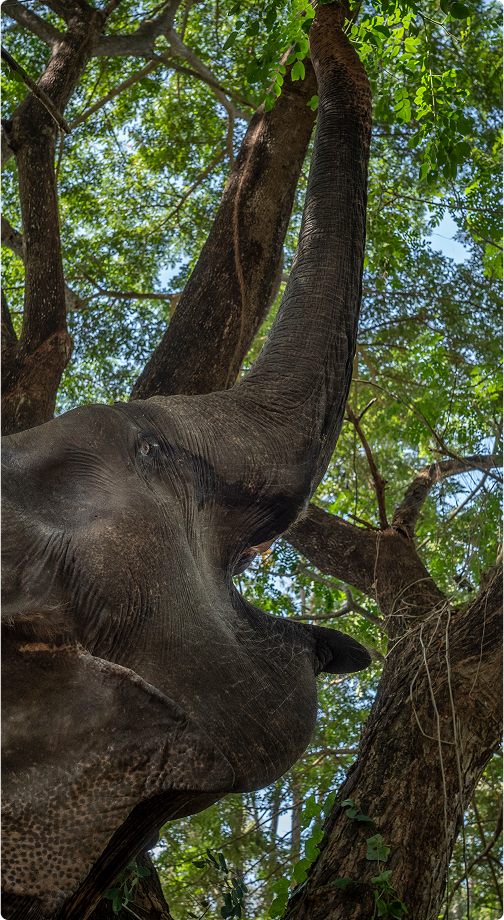
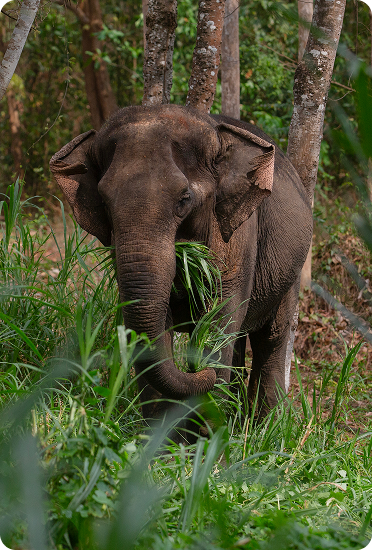
Boonlai is an elephant known for her intelligence and gentle calmness. She originally lived in a camp in Northern Thailand and was healthier and more robust than many other elephants. Her former family cared for her deeply, treating her like one of their family members. However, due to difficulties, they decided to entrust Boonlai to us, confident that we would take good care of her so she could enjoy a peaceful retirement surrounded by the nature she deserves.
In the past, Boonlai worked as a logging elephant, gaining valuable experience and wisdom that allowed her to adapt and live freely in the wild with ease. From the first day with us, Boonlai immediately knew how to forage for food without hesitation, unlike other elephants who needed time to adjust to their new environment. She is familiar with many types of forest plants and often leads other elephants to share food. Her previous owner once told us that if there is an elephant reluctant to eat, taking her to walk with Boonlai usually helps, as Boonlai naturally leads.
Boonlai also displays remarkable cleverness. For example, when given a bunch of bananas, she carefully eats only the bananas, neatly leaving the stalk behind—something not easy for elephants with their large trunks and mouths. She has also shown kindness by helping a young elephant being bullied, even though it wasn’t her child.
One memorable story about Boonlai is from the tsunami event. While working with tourists on the beach, she sensed the earthquake and immediately led a young girl and her mahout up the hill, refusing to come down even after the tremors stopped. Soon after, a giant wave struck the shore, and thanks to Boonlai’s instincts, both the mahout and the tourists survived.
Boonlai is an elephant known for her intelligence and gentle calmness. She originally lived in a camp in Northern Thailand and was healthier and more robust than many other elephants. Her former family cared for her deeply, treating her like one of their family members. However, due to difficulties, they decided to entrust Boonlai to us, confident that we would take good care of her so she could enjoy a peaceful retirement surrounded by the nature she deserves.
In the past, Boonlai worked as a logging elephant, gaining valuable experience and wisdom that allowed her to adapt and live freely in the wild with ease. From the first day with us, Boonlai immediately knew how to forage for food without hesitation, unlike other elephants who needed time to adjust to their new environment. She is familiar with many types of forest plants and often leads other elephants to share food. Her previous owner once told us that if there is an elephant reluctant to eat, taking her to walk with Boonlai usually helps, as Boonlai naturally leads.
Boonlai also displays remarkable cleverness. For example, when given a bunch of bananas, she carefully eats only the bananas, neatly leaving the stalk behind—something not easy for elephants with their large trunks and mouths. She has also shown kindness by helping a young elephant being bullied, even though it wasn’t her child.
One memorable story about Boonlai is from the tsunami event. While working with tourists on the beach, she sensed the earthquake and immediately led a young girl and her mahout up the hill, refusing to come down even after the tremors stopped. Soon after, a giant wave struck the shore, and thanks to Boonlai’s instincts, both the mahout and the tourists survived.
Ruay Ngern
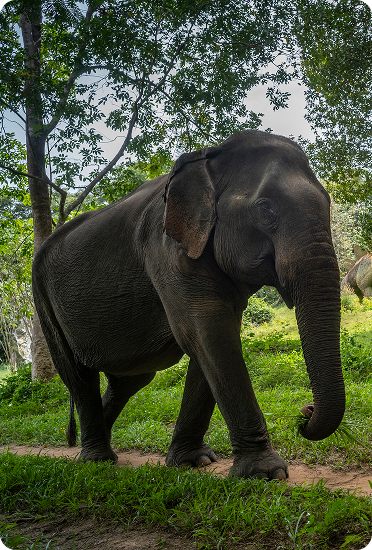
Ruay Ngern is an elephant originally from Myanmar and is among the last generation captured from the wild forests when wild elephants were still abundant in Southeast Asia. She once worked as a logging elephant before becoming a tourist taxi elephant in northern Thailand. Despite her varied and demanding past, Ruay Ngern remains physically strong and healthier than many other elephants, likely due to her earlier life in the forest. She has two muscle lumps on her shoulders from logging work, but veterinarians have confirmed they pose no health risk.
Ruay Ngern is naturally shy and fearful. She often gets scared by things around her—cars, dogs, birds, or even other elephants. When startled or feeling unsafe, she tends to hide behind trees and sometimes covers her face with her trunk, as if closing her eyes would make her invisible—though her belly is still very visible. This fearfulness may stem from a traumatic past when her previous owner tied her in the forest to mate with wild elephants. The wild elephant involved was too large, causing an accident that left her with a lasting fear of other elephants.
Though cautious, Ruay Ngern is gradually adapting. She used to flee when other elephants approached but now is willing to follow at a distance—still afraid of fully joining the herd but clearly trying. She has a gentle nature, especially with children, and once saved fellow elephants during a flash flood in Chiang Mai. While tourists bathed the elephants in a stream, she suddenly rose and called others out of the water, instinctively protecting them from danger.
Currently, Ruay Ngern lives with us because her previous owners’ family could no longer care for her after the passing of her owner’s father. We took her in because of Boonlai, who is from the same camp. We hope that living with a new herd and new friends will help Ruay Ngern grow more confident each day—so she won’t need to hide behind trees anymore.
Ruay Ngern is an elephant originally from Myanmar and is among the last generation captured from the wild forests when wild elephants were still abundant in Southeast Asia. She once worked as a logging elephant before becoming a tourist taxi elephant in northern Thailand. Despite her varied and demanding past, Ruay Ngern remains physically strong and healthier than many other elephants, likely due to her earlier life in the forest. She has two muscle lumps on her shoulders from logging work, but veterinarians have confirmed they pose no health risk.
Ruay Ngern is naturally shy and fearful. She often gets scared by things around her—cars, dogs, birds, or even other elephants. When startled or feeling unsafe, she tends to hide behind trees and sometimes covers her face with her trunk, as if closing her eyes would make her invisible—though her belly is still very visible. This fearfulness may stem from a traumatic past when her previous owner tied her in the forest to mate with wild elephants. The wild elephant involved was too large, causing an accident that left her with a lasting fear of other elephants.
Though cautious, Ruay Ngern is gradually adapting. She used to flee when other elephants approached but now is willing to follow at a distance—still afraid of fully joining the herd but clearly trying. She has a gentle nature, especially with children, and once saved fellow elephants during a flash flood in Chiang Mai. While tourists bathed the elephants in a stream, she suddenly rose and called others out of the water, instinctively protecting them from danger.
Currently, Ruay Ngern lives with us because her previous owners’ family could no longer care for her after the passing of her owner’s father. We took her in because of Boonlai, who is from the same camp. We hope that living with a new herd and new friends will help Ruay Ngern grow more confident each day—so she won’t need to hide behind trees anymore.
Sribua
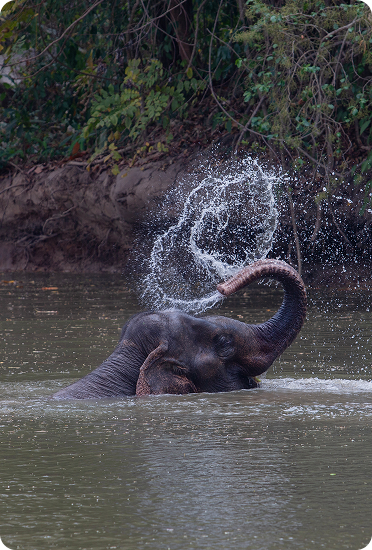
Sribua once worked at a tourist elephant camp in eastern Thailand, where visitors would ride on elephants to experience them up close. However, she had been injured in her right hind leg from her earlier years working in the logging industry, where she was used to pull logs. The injury left her leg deformed, making her moves noticeably slower. Despite her physical limitations, Sribua was forced to walk faster through harsh means, including beatings and pushing, which only worsened her condition and caused further pain.
When we first met Sribua, she walked slowly and appeared depressed, showing signs of deep sadness. Her ears didn’t flap, her head hung low, and her tail didn’t sway like other elephants. She remained quiet and unresponsive to other elephants, which deeply concerned us. After coming to live with us and receiving gentle, attentive care, we began to see a transformation. With other elephants nearby, Sribua gradually became more lively, curious, and started to engage with them. She was also provided with a varied diet and a suitable forest environment, allowing her to rest, bathe in ponds, and explore freely with the herd. Even though she is still easily startled—sometimes frightened by fish in the water or worried that she can’t find her way out of the pond—she often calls out to Boonlai, who is eating nearby, to come and help her.
Today, Sribua is playful and full of life. She enjoys teasing and playfully bumping heads with others, especially her best friend, Kamrai. Sometimes their games get so energetic that our caretakers have to step in to calm things down. While Sribua still walks slowly, it no longer holds her back from enjoying her life or building strong relationships with other elephants and her mahouts. She trusts her mahouts deeply, often leaning into them for gentle strokes and affection.
Sribua once worked at a tourist elephant camp in eastern Thailand, where visitors would ride on elephants to experience them up close. However, she had been injured in her right hind leg from her earlier years working in the logging industry, where she was used to pull logs. The injury left her leg deformed, making her moves noticeably slower. Despite her physical limitations, Sribua was forced to walk faster through harsh means, including beatings and pushing, which only worsened her condition and caused further pain.
When we first met Sribua, she walked slowly and appeared depressed, showing signs of deep sadness. Her ears didn’t flap, her head hung low, and her tail didn’t sway like other elephants. She remained quiet and unresponsive to other elephants, which deeply concerned us. After coming to live with us and receiving gentle, attentive care, we began to see a transformation. With other elephants nearby, Sribua gradually became more lively, curious, and started to engage with them. She was also provided with a varied diet and a suitable forest environment, allowing her to rest, bathe in ponds, and explore freely with the herd. Even though she is still easily startled—sometimes frightened by fish in the water or worried that she can’t find her way out of the pond—she often calls out to Boonlai, who is eating nearby, to come and help her.
Today, Sribua is playful and full of life. She enjoys teasing and playfully bumping heads with others, especially her best friend, Kamrai. Sometimes their games get so energetic that our caretakers have to step in to calm things down. While Sribua still walks slowly, it no longer holds her back from enjoying her life or building strong relationships with other elephants and her mahouts. She trusts her mahouts deeply, often leaning into them for gentle strokes and affection.
Gumrai
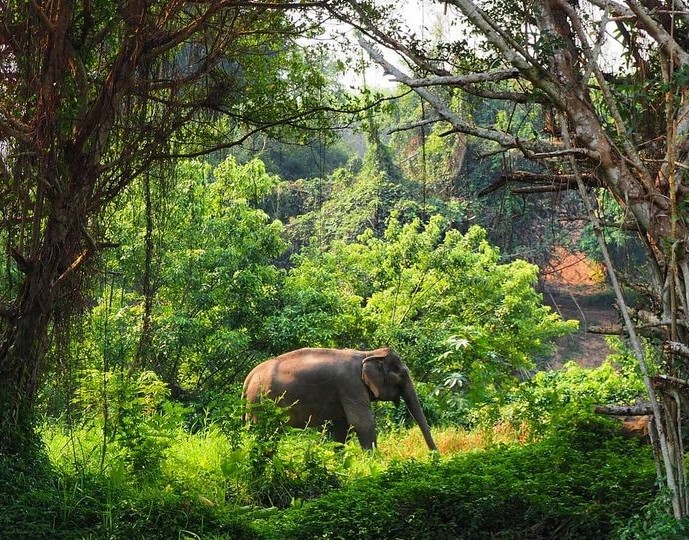
Gumrai is an elephant who once worked at a tourist camp in eastern Thailand, where she gave rides to visitors through the forest. Although she came from the same place as the other elephants, Saengdao, the two were not particularly close, having worked separately without the chance to form bonds like elephants in the wild.
Her full history is unclear, as she changed owners several times, and many documents were lost. It’s likely Kamrai was once used in the logging industry before it was banned in 1989—a shift that led many elephants into tourism.
Gumrai requires special care due to digestive issues and anemia, possibly linked to lice commonly found in the old camps. With her thick hair, she needs regular attention and is often seen spraying mud and shifting her body, perhaps to ease discomfort.
She used to show signs of stress, like swaying her head when confined or waiting for food, what veterinarians call stereotypic behavior. Thankfully, since living alongside her new companions Seebua and Boonlai, these signs have slowly faded. She now plays and interacts naturally with them.
Gumrai still loves to wander the forest and can be a picky eater, but she’s adapted well to a peaceful life. She once had a loyal black dog friend, Chao Kuay, who followed her everywhere.
Today, Gumrai enjoys a calm, natural environment, with friends to share her days—and most importantly, no longer has to wake up to work.
Kamrai is an elephant who once worked at a tourist camp in eastern Thailand, where she gave rides to visitors through the forest. Although she came from the same place as the other elephants, Saengdao, the two were not particularly close, having worked separately without the chance to form bonds like elephants in the wild.
Her full history is unclear, as she changed owners several times, and many documents were lost. It’s likely Kamrai was once used in the logging industry before it was banned in 1989—a shift that led many elephants into tourism.
Kamrai requires special care due to digestive issues and anemia, possibly linked to lice commonly found in the old camps. With her thick hair, she needs regular attention and is often seen spraying mud and shifting her body, perhaps to ease discomfort.
She used to show signs of stress, like swaying her head when confined or waiting for food, what veterinarians call stereotypic behavior. Thankfully, since living alongside her new companions Seebua and Boonlai, these signs have slowly faded. She now plays and interacts naturally with them.
Kamrai still loves to wander the forest and can be a picky eater, but she’s adapted well to a peaceful life. She once had a loyal black dog friend, Chao Kuay, who followed her everywhere.
Today, Kamrai enjoys a calm, natural environment, with friends to share her days—and most importantly, no longer has to wake up to work.
Somboon
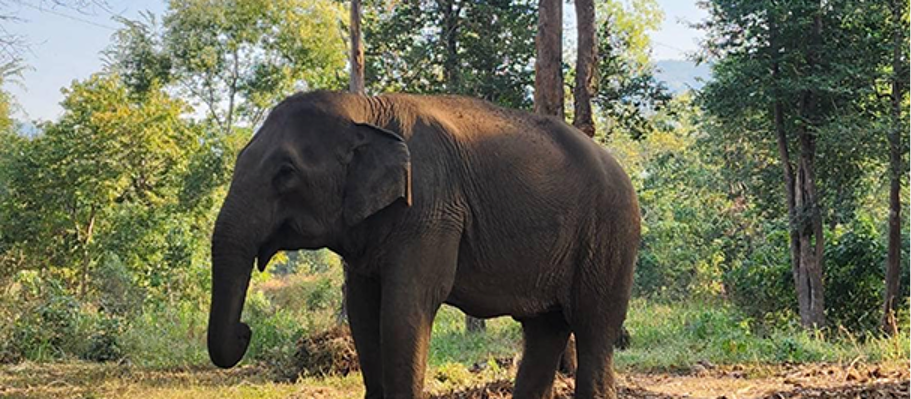
Once, Somboon’s life was far from peaceful. She had worked in the tourism industry in northern Thailand before being sold to haul heavy logs in the south. Later, she was sent to another elephant camp.
Somboon trusted only her long-time mahout. When she was handed over to a new one, she refused to obey — a decision that led to violent mistreatment. The pain and betrayal left her fearful, defensive, and deeply wary of people. Eventually, she was returned to her former owner.
Then, one day, fate struck again. In an unfortunate accident, Somboon injured a foreign tourist. Though unintentional, the incident marked her as a “dangerous elephant.” No tourism camp would take her in. Without help, her only remaining future would have been to return to the harsh and exhausting work of logging — a burden far too great for her age.
Hope came in the form of Ms. Kanjana Silpa-archa, a compassionate woman who could not stand by and watch Somboon’s story end in hardship. She purchased Somboon’s freedom and brought her to a safe, welcoming home — Elephant Forest Phitsanulok.
Here, Somboon’s days are no longer filled with fear or forced labor. She is surrounded by kindness, nourished with a variety of fresh foods, free to wander through the forest, and delighted by her favorite fruit — sweet mayong chid (Marian plums).
Slowly, she is learning to trust again. She understands her new mahout’s voice and gestures, and in time, she will be introduced to other elephants her age — giving her the chance to form bonds and build a new life within the herd.
At Elephant Forest, we believe that with time, patience, and love, Somboon will let go of her fear, rediscover her gentle spirit, and spend the rest of her days living in peace — surrounded by friends, and embraced by the forest that is now her forever home.
Once, Somboon’s life was far from peaceful. She had worked in the tourism industry in northern Thailand before being sold to haul heavy logs in the south. Later, she was sent to another elephant camp.
Somboon trusted only her long-time mahout. When she was handed over to a new one, she refused to obey — a decision that led to violent mistreatment. The pain and betrayal left her fearful, defensive, and deeply wary of people. Eventually, she was returned to her former owner.
Then, one day, fate struck again. In an unfortunate accident, Somboon injured a foreign tourist. Though unintentional, the incident marked her as a “dangerous elephant.” No tourism camp would take her in. Without help, her only remaining future would have been to return to the harsh and exhausting work of logging — a burden far too great for her age.
Hope came in the form of Ms. Kanjana Silpa-archa, a compassionate woman who could not stand by and watch Somboon’s story end in hardship. She purchased Somboon’s freedom and brought her to a safe, welcoming home — Elephant Forest Phitsanulok.
Here, Somboon’s days are no longer filled with fear or forced labor. She is surrounded by kindness, nourished with a variety of fresh foods, free to wander through the forest, and delighted by her favorite fruit — sweet mayong chid (Marian plums).
Slowly, she is learning to trust again. She understands her new mahout’s voice and gestures, and in time, she will be introduced to other elephants her age — giving her the chance to form bonds and build a new life within the herd.
At Elephant Forest, we believe that with time, patience, and love, Somboon will let go of her fear, rediscover her gentle spirit, and spend the rest of her days living in peace — surrounded by friends, and embraced by the forest that is now her forever home.
Saengdao
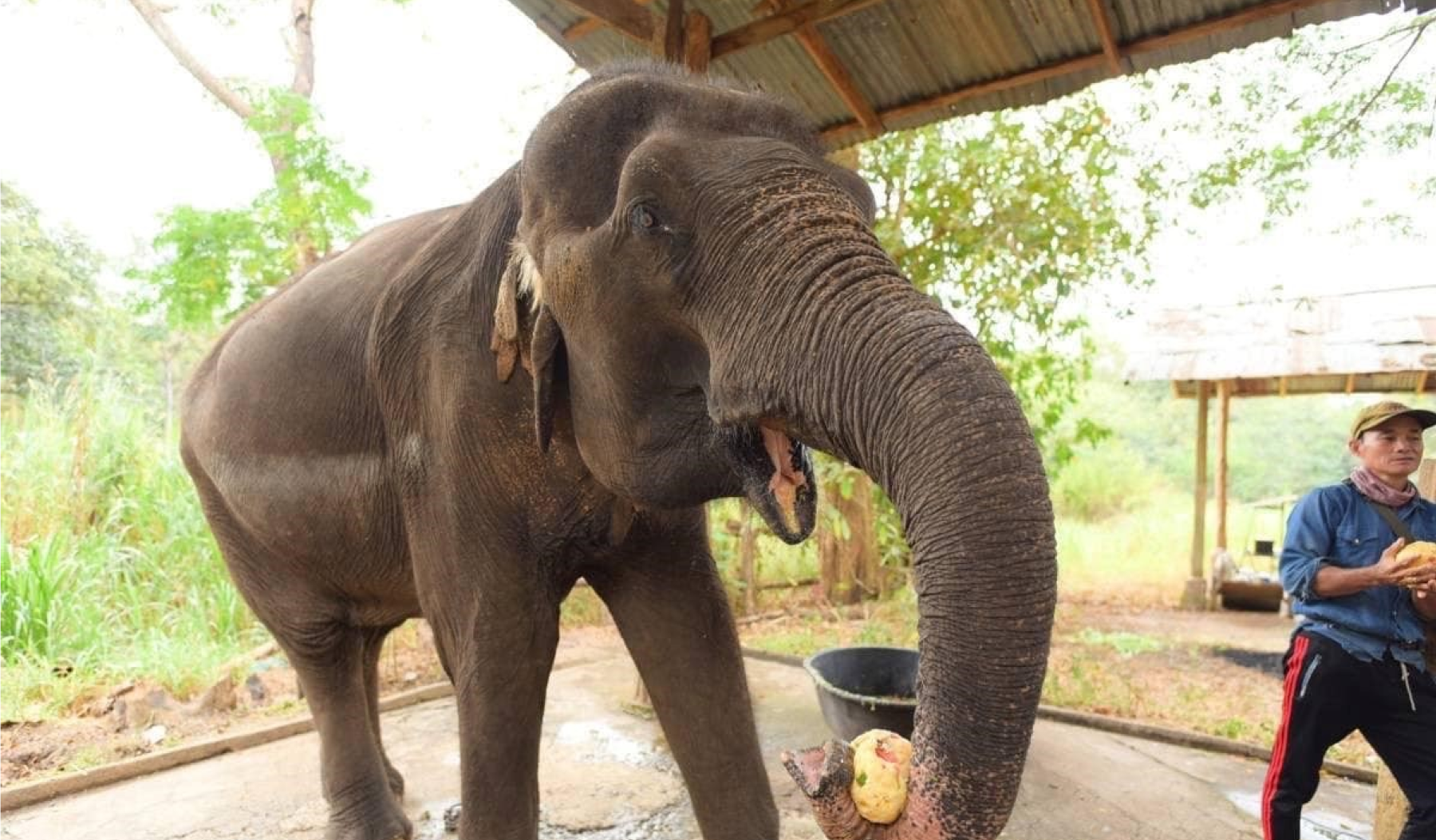
Saengdao, or what we usually call Granny Saengdao, was an elderly elephant we first met on September 24, 2018, at an elephant camp. At that time, she was in a worrying condition—her overall health was weak, she was underweight, and had an infected wound on her head. Elephant specialists estimated that she had no more than 6 months to live. We immediately decided to take Granny Saengdao in, hoping to care for her and provide a peaceful final chapter of her life.
Although her previous owner described her as stubborn, Granny Saengdao cooperated well with our mahouts after arriving. We believe this was because she no longer had to work hard and could live freely in a warm, safe environment. Due to her old age, most of her teeth had fallen out, so she needed soft, easy-to-chew food. Our veterinary team and staff carefully prepared suitable meals and closely monitored her health.
Despite the initial prognosis of only 6 months, Granny Saengdao lived with us for a full 7 years. During this time, she not only recovered physically but also became a beloved figure among visiting tourists. Many were touched by her gentle smile and warm eyes, inspiring a new generation to appreciate and help conserve Thai elephants.
In her final years, Granny Saengdao suffered from eye problems and required treatment at a veterinary hospital. She endured all procedures patiently and peacefully before passing away due to a blood infection. Tests also revealed she had liver disease. Though we were deeply saddened to say goodbye, we take pride in having cared for her, ensuring her last years were calm, happy, and filled with love.
Saengdao, or what we usually call Granny Saengdao, was an elderly elephant we first met on September 24, 2018, at an elephant camp. At that time, she was in a worrying condition—her overall health was weak, she was underweight, and had an infected wound on her head. Elephant specialists estimated that she had no more than 6 months to live. We immediately decided to take Granny Saengdao in, hoping to care for her and provide a peaceful final chapter of her life.
Although her previous owner described her as stubborn, Granny Saengdao cooperated well with our mahouts after arriving. We believe this was because she no longer had to work hard and could live freely in a warm, safe environment. Due to her old age, most of her teeth had fallen out, so she needed soft, easy-to-chew food. Our veterinary team and staff carefully prepared suitable meals and closely monitored her health.
Despite the initial prognosis of only 6 months, Granny Saengdao lived with us for a full 7 years. During this time, she not only recovered physically but also became a beloved figure among visiting tourists. Many were touched by her gentle smile and warm eyes, inspiring a new generation to appreciate and help conserve Thai elephants.
In her final years, Granny Saengdao suffered from eye problems and required treatment at a veterinary hospital. She endured all procedures patiently and peacefully before passing away due to a blood infection. Tests also revealed she had liver disease. Though we were deeply saddened to say goodbye, we take pride in having cared for her, ensuring her last years were calm, happy, and filled with love.
Koon
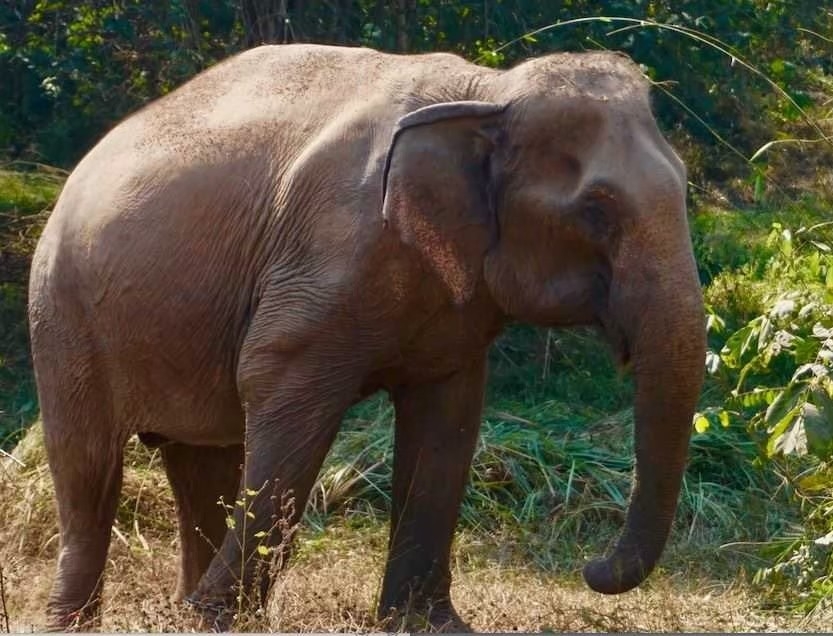
Koon used to work carrying tourists on her back and often had to sit and stand on hard concrete floors, which caused lumps to form on her face and front right leg. These lumps were never treated, but after veterinary checks confirmed they were not harmful, we have been closely monitoring her condition.
When Koon first came to us, she was very shy and avoided eye contact. She often walked away from both people and other elephants. We understand that she likely had difficult past experiences that made her wary of others. Despite this, Koon has always been well-behaved, obedient, and never stubborn.
At first, Koon ate very little, even refusing to stop and eat during walks in the forest, which is very unusual for elephants. Later, we found out she was trained to keep walking without pausing to eat while carrying tourists. One day, she stopped to enjoy eating bamboo, showing us that she was not uninterested in food, but simply a picky eater who loves bamboo. Shortly after arriving, Koon disappeared for a few days, and we found her calmly chewing bamboo deep in the forest, with signs of her path clearly visible. Because of her love for bamboo, the gardening team planted more bamboo to support her.
Koon also has a playful side that makes us smile, especially when she plays in the water. She loves to splash herself with her trunk and sometimes hides underwater, popping just her trunk up and looking at us like she invited us to come play with her. Her close friend Sribua often invites her to swim together, and after some hesitation, Koon happily joins in.
Koon lived happily with us until 2023, when veterinarians diagnosed her with tuberculosis. Although she showed no symptoms until later years, the disease can spread to other elephants and humans, so we decided to admit her to the hospital for treatment to keep everyone safe. Koon cooperated well with her treatment despite her dislike of it, showing her usual gentle and kind nature.
Her story is a reminder of the importance of respecting elephants by admiring them from a safe distance since some diseases can spread silently. Even though we don’t see Koon every day now, the warmth, kindness, and smiles she shared will always remain in our hearts.
Koon used to work carrying tourists on her back and often had to sit and stand on hard concrete floors, which caused lumps to form on her face and front right leg. These lumps were never treated, but after veterinary checks confirmed they were not harmful, we have been closely monitoring her condition.
When Koon first came to us, she was very shy and avoided eye contact. She often walked away from both people and other elephants. We understand that she likely had difficult past experiences that made her wary of others. Despite this, Koon has always been well-behaved, obedient, and never stubborn.
At first, Koon ate very little, even refusing to stop and eat during walks in the forest, which is very unusual for elephants. Later, we found out she was trained to keep walking without pausing to eat while carrying tourists. One day, she stopped to enjoy eating bamboo, showing us that she was not uninterested in food, but simply a picky eater who loves bamboo. Shortly after arriving, Koon disappeared for a few days, and we found her calmly chewing bamboo deep in the forest, with signs of her path clearly visible. Because of her love for bamboo, the gardening team planted more bamboo to support her.
Koon also has a playful side that makes us smile, especially when she plays in the water. She loves to splash herself with her trunk and sometimes hides underwater, popping just her trunk up and looking at us like she invited us to come play with her. Her close friend Sribua often invites her to swim together, and after some hesitation, Koon happily joins in.
Koon lived happily with us until 2023, when veterinarians diagnosed her with tuberculosis. Although she showed no symptoms until later years, the disease can spread to other elephants and humans, so we decided to admit her to the hospital for treatment to keep everyone safe. Koon cooperated well with her treatment despite her dislike of it, showing her usual gentle and kind nature.
Her story is a reminder of the importance of respecting elephants by admiring them from a safe distance since some diseases can spread silently. Even though we don’t see Koon every day now, the warmth, kindness, and smiles she shared will always remain in our hearts.

บุญหลาย
บุญหลายเป็นช้างที่เปี่ยมด้วยสติปัญญาและความสงบอ่อนโยน เดิมอาศัยอยู่ในปางช้างในภาคเหนือ โดยมีสุขภาพแข็งแรงและร่างกายสมบูรณ์ กว่าช้างเชือกอื่น ๆ ครอบครัวเก่าที่ดูแลบุญหลายรักและผูกพันเป็นอย่างมากเหมือนคนในครอบครัว แต่เพราะประสบปัญหา จึงตัดสินใจมอบบุญหลายให้กับเราหลังจากแน่ใจว่าเราจะดูแลบุญหลายได้เป็นอย่างดี เพื่อให้เธอได้ใช้ชีวิตในวัยเกษียณอย่างมีความสุข ท่ามกลางธรรมชาติที่ควรได้รับ
ในอดีต บุญหลายเคยทำงานลากซุงในป่า ทำให้มีประสบการณ์และสติปัญญาที่สะสมมา และสามารถปรับตัวและใช้ชีวิตอย่างอิสระในธรรมชาติได้อย่างดีเยี่ยม เมื่อมาอยู่กับเราในวันแรก บุญหลายสามารถหาอาหารกินเองได้ทันทีโดยไม่ลังเล แตกต่างจากช้างเชือกอื่นที่ต้องใช้เวลาปรับตัวกับสิ่งแวดล้อมใหม่ เขารู้จักพืชหลากหลายชนิดในป่า และสามารถนำช้างเชือกอื่น ๆ ไปกินอาหารร่วมกันได้ เจ้าของเก่าเคยบอกกับเราว่า หากมีช้างที่ไม่ค่อยกินอาหาร ให้นำไปเดินกับบุญหลาย เพราะเธอจะเป็นผู้นำให้
บุญหลายยังมีไหวพริบและความเฉลียวฉลาดอีกมากมาย เช่น เวลาที่ได้รับกล้วยหนึ่งเครือ เธอจะเลือกกินเฉพาะผลกล้วยอย่างระมัดระวัง โดยทิ้งก้านเครือไว้อย่างเรียบร้อย ซึ่งเป็นเรื่องไม่ง่ายนักสำหรับช้างทั่วไปที่มีงวงและปากขนาดใหญ่ หรือเมื่อครั้งที่บุญหลายช่วยลูกช้างที่ถูกรังแกแม้ลูกช้างเชือกนั้นจะไม่ใช่ลูกของบุญหลายก็ตาม
เรื่องเล่าหนึ่งของบุญหลายที่น่าประทับใจคือในช่วงเหตุการณ์สึนามิ บุญหลายทำงานรับนักท่องเที่ยวที่ชายหาด เมื่อเกิดแผ่นดินไหว เธอพาเด็กหญิง และควาญหนีขึ้นเขา โดยไม่ยอมกลับลงมาแม้เหตุการณ์จะสงบแล้ว ทั้งที่โดยปกติแล้วเธอเชื่อฟังคำสั่งเสมอ ไม่นานนักคลื่นยักษ์ก็ถาโถมเข้าสู่ชายฝั่ง ทำให้ทั้งควาญและนักท่องเที่ยวรอดชีวิตได้
บุญหลายเป็นช้างที่เปี่ยมด้วยสติปัญญาและความสงบอ่อนโยน เดิมอาศัยอยู่ในปางช้างในภาคเหนือ โดยมีสุขภาพแข็งแรงและร่างกายสมบูรณ์ กว่าช้างเชือกอื่น ๆ ครอบครัวเก่าที่ดูแลบุญหลายรักและผูกพันเป็นอย่างมากเหมือนคนในครอบครัว แต่เพราะประสบปัญหา จึงตัดสินใจมอบบุญหลายให้กับเราหลังจากแน่ใจว่าเราจะดูแลบุญหลายได้เป็นอย่างดี เพื่อให้เธอได้ใช้ชีวิตในวัยเกษียณอย่างมีความสุข ท่ามกลางธรรมชาติที่ควรได้รับ
ในอดีต บุญหลายเคยทำงานลากซุงในป่า ทำให้มีประสบการณ์และสติปัญญาที่สะสมมา และสามารถปรับตัวและใช้ชีวิตอย่างอิสระในธรรมชาติได้อย่างดีเยี่ยม เมื่อมาอยู่กับเราในวันแรก บุญหลายสามารถหาอาหารกินเองได้ทันทีโดยไม่ลังเล แตกต่างจากช้างเชือกอื่นที่ต้องใช้เวลาปรับตัวกับสิ่งแวดล้อมใหม่ เขารู้จักพืชหลากหลายชนิดในป่า และสามารถนำช้างเชือกอื่น ๆ ไปกินอาหารร่วมกันได้ เจ้าของเก่าเคยบอกกับเราว่า หากมีช้างที่ไม่ค่อยกินอาหาร ให้นำไปเดินกับบุญหลาย เพราะเธอจะเป็นผู้นำให้
บุญหลายยังมีไหวพริบและความเฉลียวฉลาดอีกมากมาย เช่น เวลาที่ได้รับกล้วยหนึ่งเครือ เธอจะเลือกกินเฉพาะผลกล้วยอย่างระมัดระวัง โดยทิ้งก้านเครือไว้อย่างเรียบร้อย ซึ่งเป็นเรื่องไม่ง่ายนักสำหรับช้างทั่วไปที่มีงวงและปากขนาดใหญ่ หรือเมื่อครั้งที่บุญหลายช่วยลูกช้างที่ถูกรังแกแม้ลูกช้างเชือกนั้นจะไม่ใช่ลูกของบุญหลายก็ตาม
เรื่องเล่าหนึ่งของบุญหลายที่น่าประทับใจคือในช่วงเหตุการณ์สึนามิ บุญหลายทำงานรับนักท่องเที่ยวที่ชายหาด เมื่อเกิดแผ่นดินไหว เธอพาเด็กหญิง และควาญหนีขึ้นเขา โดยไม่ยอมกลับลงมาแม้เหตุการณ์จะสงบแล้ว ทั้งที่โดยปกติแล้วเธอเชื่อฟังคำสั่งเสมอ ไม่นานนักคลื่นยักษ์ก็ถาโถมเข้าสู่ชายฝั่ง ทำให้ทั้งควาญและนักท่องเที่ยวรอดชีวิตได้
รวยเงิน
รวยเงินเป็นช้างที่มาจากพม่า และถือเป็นหนึ่งในช้างรุ่นสุดท้ายที่ถูกจับมาจากป่าธรรมชาติในช่วงที่ช้างป่ายังมีอยู่มากในเอเชียตะวันออกเฉียงใต้ เคยใช้แรงงานเป็นช้างลากซุง และต่อมาก็กลายเป็นช้างแท็กซี่ให้นักท่องเที่ยวขึ้นนั่งในภาคเหนือของไทย ถึงแม้จะผ่านงานหนักมาหลายรูปแบบ แต่รวยเงินกลับยังมีสุขภาพกายที่สมบูรณ์ แข็งแรงกว่าเพื่อนช้างหลายเชือก เพราะเคยมีโอกาสใช้ชีวิตในป่ามาก่อน มีก้อนกล้ามเนื้อบนหัวไหล่จำนวน 2 ก้อนจากการลากซุง แต่สัตวแพทย์วินิจฉัยแล้วว่าสุขภาพโดยรวมดี ก้อนกล้ามเนื้อไม่ได้เป็นอันตราย
รวยเงินมีนิสัยขี้อายและขี้กลัว เธอมักกลัวสิ่งต่าง ๆ รอบตัว ไม่ว่าจะเป็นรถ สุนัข นก หรือแม้แต่ช้างเชือกอื่น เวลาตกใจหรือรู้สึกไม่ปลอดภัย ก็มักจะเดินไปยืนหลบหลังต้นไม้ บางครั้งยกงวงปิดหน้าตัวเองไว้ ทำเหมือนว่าแค่ปิดตาแล้วคนจะมองไม่เห็น แม้ว่าท้องจะยังโผล่ออกมาให้เห็นชัดก็ตาม พฤติกรรมขี้กลัวนี้อาจมีสาเหตุจากอดีต เมื่อครั้งเจ้าของเก่าเคยพาเธอไปผูกไว้ในป่าเพื่อให้ช้างป่าผสมพันธุ์ แต่ช้างที่มานั้นตัวใหญ่เกินไปจนเกิดอุบัติเหตุ ทำให้เธออาจฝังใจและกลัวช้างตัวอื่นตั้งแต่นั้น
ถึงแม้จะระแวง แต่รวยเงินก็พยายามปรับตัวมากขึ้นในแต่ละวัน ตอนแรกเธอจะเดินหนีเมื่อมีช้างเชือกอื่นเข้าใกล้ แต่ตอนนี้เริ่มกล้าเดินตามจากระยะห่างเล็กน้อย เหมือนกลัวจะโดนทิ้งแต่ก็ยังไม่กล้าเดินกับโขลงเต็มที่ รวยเงินเป็นช้างที่มีจิตใจอ่อนโยน โดยเฉพาะกับเด็ก และยังเคยช่วยชีวิตเพื่อน ๆ มาแล้วครั้งหนึ่ง สมัยทำงานที่เชียงใหม่ ขณะให้นักท่องเที่ยวอาบน้ำช้างในลำธาร จู่ ๆ รวยเงินก็ลุกขึ้นจากน้ำและเรียกช้างเชือกอื่นขึ้นจากน้ำตามกันมา ไม่นานหลังจากนั้นก็มีน้ำป่าไหลหลากลงมา ทำให้ทุกชีวิตรอดปลอดภัย เพราะสัญชาตญาณของเธอ
ปัจจุบันรวยเงินได้มาอยู่กับเราเพราะครอบครัวเจ้าของเก่าไม่สามารถดูแลต่อได้ หลังจากคุณพ่อเสียชีวิต เราได้รับเธอมาดูแลต่อจากบุญหลาย ซึ่งอยู่กับครอบครัวเดียวกัน และหวังว่าการได้ใช้ชีวิตร่วมกับโขลงใหม่และเพื่อนใหม่ จะช่วยให้รวยเงินมั่นใจมากขึ้นในแต่ละวัน และอาจไม่ต้องซ่อนตัวหลังต้นไม้อีกต่อไป
สีบัว
Gumrai
Gumrai is an elephant who once worked at a tourist camp in eastern Thailand, where she gave rides to visitors through the forest. Although she came from the same place as the other elephants, Saengdao, the two were not particularly close, having worked separately without the chance to form bonds like elephants in the wild.
Her full history is unclear, as she changed owners several times, and many documents were lost. It’s likely Kamrai was once used in the logging industry before it was banned in 1989—a shift that led many elephants into tourism.
Gumrai requires special care due to digestive issues and anemia, possibly linked to lice commonly found in the old camps. With her thick hair, she needs regular attention and is often seen spraying mud and shifting her body, perhaps to ease discomfort.
She used to show signs of stress, like swaying her head when confined or waiting for food, what veterinarians call stereotypic behavior. Thankfully, since living alongside her new companions Seebua and Boonlai, these signs have slowly faded. She now plays and interacts naturally with them.
Gumrai still loves to wander the forest and can be a picky eater, but she’s adapted well to a peaceful life. She once had a loyal black dog friend, Chao Kuay, who followed her everywhere.
Today, Gumrai enjoys a calm, natural environment, with friends to share her days—and most importantly, no longer has to wake up to work.
Kamrai is an elephant who once worked at a tourist camp in eastern Thailand, where she gave rides to visitors through the forest. Although she came from the same place as the other elephants, Saengdao, the two were not particularly close, having worked separately without the chance to form bonds like elephants in the wild.
Her full history is unclear, as she changed owners several times, and many documents were lost. It’s likely Kamrai was once used in the logging industry before it was banned in 1989—a shift that led many elephants into tourism.
Kamrai requires special care due to digestive issues and anemia, possibly linked to lice commonly found in the old camps. With her thick hair, she needs regular attention and is often seen spraying mud and shifting her body, perhaps to ease discomfort.
She used to show signs of stress, like swaying her head when confined or waiting for food, what veterinarians call stereotypic behavior. Thankfully, since living alongside her new companions Seebua and Boonlai, these signs have slowly faded. She now plays and interacts naturally with them.
Kamrai still loves to wander the forest and can be a picky eater, but she’s adapted well to a peaceful life. She once had a loyal black dog friend, Chao Kuay, who followed her everywhere.
Today, Kamrai enjoys a calm, natural environment, with friends to share her days—and most importantly, no longer has to wake up to work.
Somboon
Once, Somboon’s life was far from peaceful. She had worked in the tourism industry in northern Thailand before being sold to haul heavy logs in the south. Later, she was sent to another elephant camp.
Somboon trusted only her long-time mahout. When she was handed over to a new one, she refused to obey — a decision that led to violent mistreatment. The pain and betrayal left her fearful, defensive, and deeply wary of people. Eventually, she was returned to her former owner.
Then, one day, fate struck again. In an unfortunate accident, Somboon injured a foreign tourist. Though unintentional, the incident marked her as a “dangerous elephant.” No tourism camp would take her in. Without help, her only remaining future would have been to return to the harsh and exhausting work of logging — a burden far too great for her age.
Hope came in the form of Ms. Kanjana Silpa-archa, a compassionate woman who could not stand by and watch Somboon’s story end in hardship. She purchased Somboon’s freedom and brought her to a safe, welcoming home — Elephant Forest Phitsanulok.
Here, Somboon’s days are no longer filled with fear or forced labor. She is surrounded by kindness, nourished with a variety of fresh foods, free to wander through the forest, and delighted by her favorite fruit — sweet mayong chid (Marian plums).
Slowly, she is learning to trust again. She understands her new mahout’s voice and gestures, and in time, she will be introduced to other elephants her age — giving her the chance to form bonds and build a new life within the herd.
At Elephant Forest, we believe that with time, patience, and love, Somboon will let go of her fear, rediscover her gentle spirit, and spend the rest of her days living in peace — surrounded by friends, and embraced by the forest that is now her forever home.
Once, Somboon’s life was far from peaceful. She had worked in the tourism industry in northern Thailand before being sold to haul heavy logs in the south. Later, she was sent to another elephant camp.
Somboon trusted only her long-time mahout. When she was handed over to a new one, she refused to obey — a decision that led to violent mistreatment. The pain and betrayal left her fearful, defensive, and deeply wary of people. Eventually, she was returned to her former owner.
Then, one day, fate struck again. In an unfortunate accident, Somboon injured a foreign tourist. Though unintentional, the incident marked her as a “dangerous elephant.” No tourism camp would take her in. Without help, her only remaining future would have been to return to the harsh and exhausting work of logging — a burden far too great for her age.
Hope came in the form of Ms. Kanjana Silpa-archa, a compassionate woman who could not stand by and watch Somboon’s story end in hardship. She purchased Somboon’s freedom and brought her to a safe, welcoming home — Elephant Forest Phitsanulok.
Here, Somboon’s days are no longer filled with fear or forced labor. She is surrounded by kindness, nourished with a variety of fresh foods, free to wander through the forest, and delighted by her favorite fruit — sweet mayong chid (Marian plums).
Slowly, she is learning to trust again. She understands her new mahout’s voice and gestures, and in time, she will be introduced to other elephants her age — giving her the chance to form bonds and build a new life within the herd.
At Elephant Forest, we believe that with time, patience, and love, Somboon will let go of her fear, rediscover her gentle spirit, and spend the rest of her days living in peace — surrounded by friends, and embraced by the forest that is now her forever home.
Saengdao
Saengdao, or what we usually call Granny Saengdao, was an elderly elephant we first met on September 24, 2018, at an elephant camp. At that time, she was in a worrying condition—her overall health was weak, she was underweight, and had an infected wound on her head. Elephant specialists estimated that she had no more than 6 months to live. We immediately decided to take Granny Saengdao in, hoping to care for her and provide a peaceful final chapter of her life.
Although her previous owner described her as stubborn, Granny Saengdao cooperated well with our mahouts after arriving. We believe this was because she no longer had to work hard and could live freely in a warm, safe environment. Due to her old age, most of her teeth had fallen out, so she needed soft, easy-to-chew food. Our veterinary team and staff carefully prepared suitable meals and closely monitored her health.
Despite the initial prognosis of only 6 months, Granny Saengdao lived with us for a full 7 years. During this time, she not only recovered physically but also became a beloved figure among visiting tourists. Many were touched by her gentle smile and warm eyes, inspiring a new generation to appreciate and help conserve Thai elephants.
In her final years, Granny Saengdao suffered from eye problems and required treatment at a veterinary hospital. She endured all procedures patiently and peacefully before passing away due to a blood infection. Tests also revealed she had liver disease. Though we were deeply saddened to say goodbye, we take pride in having cared for her, ensuring her last years were calm, happy, and filled with love.
Saengdao, or what we usually call Granny Saengdao, was an elderly elephant we first met on September 24, 2018, at an elephant camp. At that time, she was in a worrying condition—her overall health was weak, she was underweight, and had an infected wound on her head. Elephant specialists estimated that she had no more than 6 months to live. We immediately decided to take Granny Saengdao in, hoping to care for her and provide a peaceful final chapter of her life.
Although her previous owner described her as stubborn, Granny Saengdao cooperated well with our mahouts after arriving. We believe this was because she no longer had to work hard and could live freely in a warm, safe environment. Due to her old age, most of her teeth had fallen out, so she needed soft, easy-to-chew food. Our veterinary team and staff carefully prepared suitable meals and closely monitored her health.
Despite the initial prognosis of only 6 months, Granny Saengdao lived with us for a full 7 years. During this time, she not only recovered physically but also became a beloved figure among visiting tourists. Many were touched by her gentle smile and warm eyes, inspiring a new generation to appreciate and help conserve Thai elephants.
In her final years, Granny Saengdao suffered from eye problems and required treatment at a veterinary hospital. She endured all procedures patiently and peacefully before passing away due to a blood infection. Tests also revealed she had liver disease. Though we were deeply saddened to say goodbye, we take pride in having cared for her, ensuring her last years were calm, happy, and filled with love.
Koon
Koon used to work carrying tourists on her back and often had to sit and stand on hard concrete floors, which caused lumps to form on her face and front right leg. These lumps were never treated, but after veterinary checks confirmed they were not harmful, we have been closely monitoring her condition.
When Koon first came to us, she was very shy and avoided eye contact. She often walked away from both people and other elephants. We understand that she likely had difficult past experiences that made her wary of others. Despite this, Koon has always been well-behaved, obedient, and never stubborn.
At first, Koon ate very little, even refusing to stop and eat during walks in the forest, which is very unusual for elephants. Later, we found out she was trained to keep walking without pausing to eat while carrying tourists. One day, she stopped to enjoy eating bamboo, showing us that she was not uninterested in food, but simply a picky eater who loves bamboo. Shortly after arriving, Koon disappeared for a few days, and we found her calmly chewing bamboo deep in the forest, with signs of her path clearly visible. Because of her love for bamboo, the gardening team planted more bamboo to support her.
Koon also has a playful side that makes us smile, especially when she plays in the water. She loves to splash herself with her trunk and sometimes hides underwater, popping just her trunk up and looking at us like she invited us to come play with her. Her close friend Sribua often invites her to swim together, and after some hesitation, Koon happily joins in.
Koon lived happily with us until 2023, when veterinarians diagnosed her with tuberculosis. Although she showed no symptoms until later years, the disease can spread to other elephants and humans, so we decided to admit her to the hospital for treatment to keep everyone safe. Koon cooperated well with her treatment despite her dislike of it, showing her usual gentle and kind nature.
Her story is a reminder of the importance of respecting elephants by admiring them from a safe distance since some diseases can spread silently. Even though we don’t see Koon every day now, the warmth, kindness, and smiles she shared will always remain in our hearts.
Koon used to work carrying tourists on her back and often had to sit and stand on hard concrete floors, which caused lumps to form on her face and front right leg. These lumps were never treated, but after veterinary checks confirmed they were not harmful, we have been closely monitoring her condition.
When Koon first came to us, she was very shy and avoided eye contact. She often walked away from both people and other elephants. We understand that she likely had difficult past experiences that made her wary of others. Despite this, Koon has always been well-behaved, obedient, and never stubborn.
At first, Koon ate very little, even refusing to stop and eat during walks in the forest, which is very unusual for elephants. Later, we found out she was trained to keep walking without pausing to eat while carrying tourists. One day, she stopped to enjoy eating bamboo, showing us that she was not uninterested in food, but simply a picky eater who loves bamboo. Shortly after arriving, Koon disappeared for a few days, and we found her calmly chewing bamboo deep in the forest, with signs of her path clearly visible. Because of her love for bamboo, the gardening team planted more bamboo to support her.
Koon also has a playful side that makes us smile, especially when she plays in the water. She loves to splash herself with her trunk and sometimes hides underwater, popping just her trunk up and looking at us like she invited us to come play with her. Her close friend Sribua often invites her to swim together, and after some hesitation, Koon happily joins in.
Koon lived happily with us until 2023, when veterinarians diagnosed her with tuberculosis. Although she showed no symptoms until later years, the disease can spread to other elephants and humans, so we decided to admit her to the hospital for treatment to keep everyone safe. Koon cooperated well with her treatment despite her dislike of it, showing her usual gentle and kind nature.
Her story is a reminder of the importance of respecting elephants by admiring them from a safe distance since some diseases can spread silently. Even though we don’t see Koon every day now, the warmth, kindness, and smiles she shared will always remain in our hearts.

